If trading Contracts for Difference (CFDs), apply the same principles. CFDs allow you to speculate on price movements without owning the asset. Set stop-loss and take-profit orders to manage risk and secure profits. The ATR indicator measures current market volatility, which helps determine the appropriate SL distance from the entry point.
A stop-loss is a pre-defined level where a trader decides to close a losing position to prevent further losses. The main objective of a stop-loss order is to limit a trader’s loss on a position. Among the broad spectrum of trading strategies, integrating a stop-loss order is often viewed as a prudent risk management practice.
Projections Based on Chart Patterns
This technique helps manage risk and secure profits while still participating in potential extended market moves. Setting stop loss and take profit levels in Forex trading is important for effective risk management and securing gains. To optimize these settings, understand market trends, use technical analysis, and adhere to a well-defined trading plan. Another method to determine take profit and stop loss levels is by using technical analysis. This involves identifying support and resistance levels and price patterns. Place your orders slightly away from the price point where the market is likely to reverse.
Technical analysis plays a significant role in determining where to place stop loss and take profit orders. Traders often look for key support and resistance zones on the charts. A stop loss is typically placed just below a support level for long positions or just above a resistance level for short positions. Conversely, take profit levels might be set near the next resistance (for long positions) or support (for short positions).
Tips for Setting Take Profit
Then, a bullish Engulfing pattern prompted us to take profits. But you can pretty much use any price pattern or indicator signal you are familiar with. The ideal trailing stop-loss should give enough room for minor pullbacks. Thus, a sensible approach is to consider how volatile the instrument is.
Thanks for Contacting us! We Will Get in Touch With You Shortly.

By following these signals, you can make more informed decisions and optimize your profit-taking strategy. The average true range (ATR) is a technical indicator that measures the volatility of a currency pair over a specified period. Traders can use the ATR to calculate their stop loss and take profit levels based on the current volatility of the market. TP closes a trade with profit when the price moves in the desired direction.
Candlestick exits
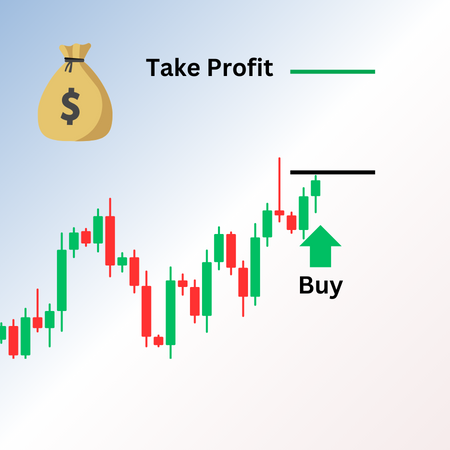
Traders can modify active orders by double-clicking on the trade in the Terminal window. A new order window will appear, allowing adjustments to stop loss and take profit levels without fxverge review closing the trade. This real-time modification is crucial for managing trades in dynamic market conditions, ensuring that risk management parameters always align with current market trends. In the fast-paced world of forex trading, risk management is essential for success. Two of the most critical risk management tools are stop loss and take profit orders.
Take-profit orders vs trailing stop orders
Additionally, you should always implement these strategies through a reputable broker like BlueSuisse. Automated orders help keep your trade’s objective and consistent, minimizing the impact of fear or greed.
- Forex trading can be an exciting and profitable venture, but it comes with its own set of risks.
- To set a take-profit order in forex trading, traders need to determine the desired profit level and set a take-profit order accordingly.
- The process of setting a Stop Loss (SL) and a Take Profit (TP) price target is one of the most important processes a retail forex trader will engage in.
- Click on the trading history tab and check the closing price.
- They’re the ones who never let a winner become a loss that cascades into a limit breach.
- Suppose you open a long position at $100 per share, with a key support level at $98.
How to Set the Stop Loss (SL) and Take Profit (TP) Targets
Stop loss (SL) or stops is defined as an order that you tell or send to your broker telling them to limit the losses on an open position (or trade). Examples, new resistance forms, volatility drops, or you switch to a trailing exit. If you change your stop after entry but keep the same lot size, you change your risk.
These techniques are invaluable in pinpointing potential market reversals or continuation patterns that can inform where to place risk management orders. MetaTrader 4 is one of the most popular trading platforms available, widely appreciated for its user-friendly interface and robust functionality. It provides traders with a variety of tools for technical analysis, automated trading, and risk management. The ability to set stop loss and take profit orders easily through MT4’s interface is one of its standout features. On the other hand, a take profit order is designed to lock in profits once a certain level is reached. This order instructs the broker to close a trade when the price reaches a pre-set target.
How do you calculate the best take-profit and stop-loss price levels?
Placing SL and TP varies according to the circumstances, but the general objective is to do so in a way that maximises profits and minimises losses. Take-profit orders frequently work in tandem with stop-loss orders to control risk and protect potential earnings. A situation where several levels are superposed is called “Confluence”. If a strong level coincides with Fibo levels or a mathematically calculated point, that’s a good TP level. TP calculation methods are subdivided into mathematical and graphical. The subdivision is conventional, and it would be difficult to say which method is better as much depends on the market situation.
Prop-Firm-Safe SL Sizing for a For Traders Challenge
Placing take-profit orders allows traders to lock in gains automatically when the market reaches a desired level. It does not require constant market monitoring and prevents potential losses from market reversals. While setting stop-loss and take-profit levels, maintaining discipline is essential. The planned levels must serve as steadfast goals in trade, unobscured by momentary market noise. Traders should resist the temptation to alter these levels once they are set, as doing so could lead to inconsistent results. Every amendment to a stop-loss or take-profit level must be meticulously justified to ensure alignment with the overall strategy and market conditions.
Time Efficiency
Determining the most effective levels for take-profit (TP) and stop-loss (SL) orders can be quite a complex task in the world of trading. Usually, establishing a stop-loss is considered a simpler task, whereas deciding on the appropriate level for a take-profit order can be discretionary and sometimes not required. The trader might bear additional spread-related expenses when opening a position again after the previous one has been closed by a TP order earlier than planned. It allows locking in profits automatically without trader’s participation.